Systems design · BESS · SCADA
Operating hybrid solar and battery systems starts with legibility.
Hybrid plants couple generation, storage, controls, and commercial expectations. The hard part is not collecting more data; it is turning operating state into a decision someone can trust.
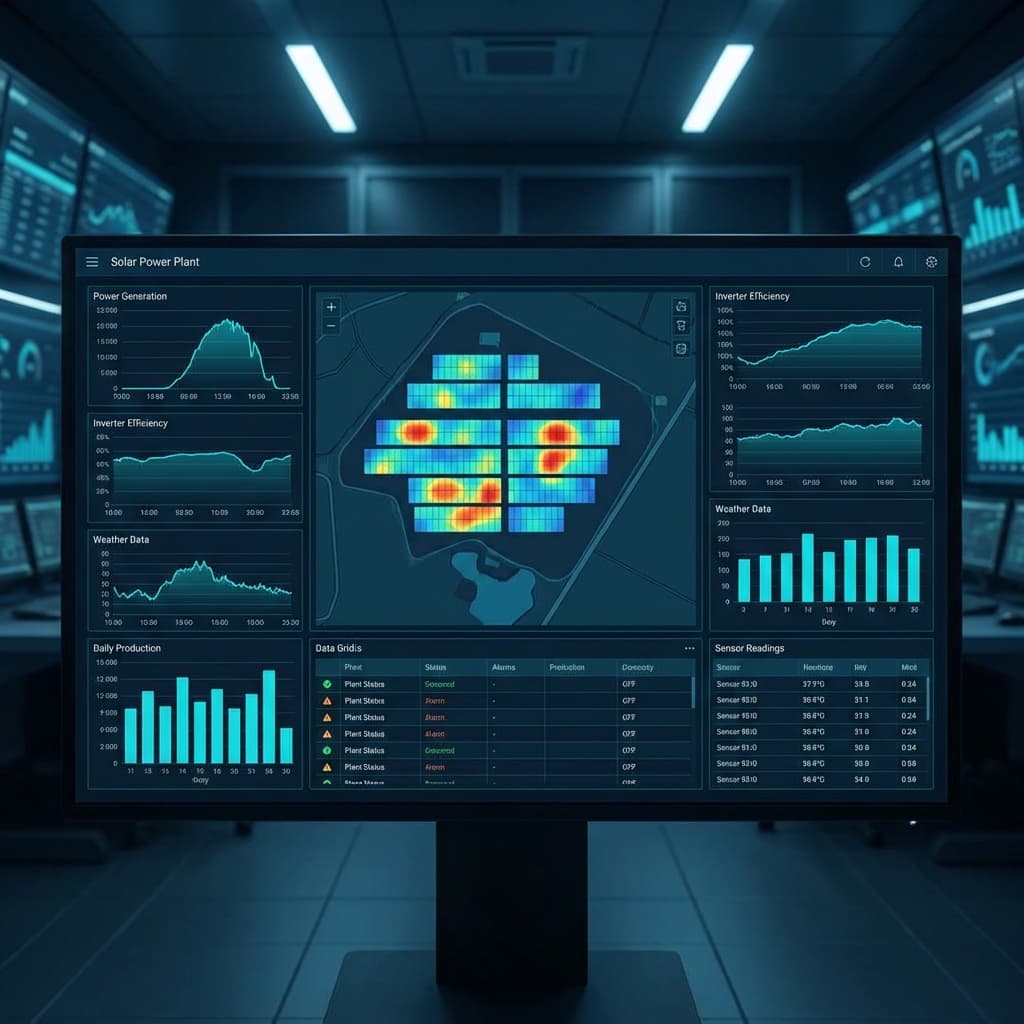
The operating problem
Hybrid assets create coordination work.
Solar and battery assets are often presented as a single capacity story. In operation, they behave more like a coordination problem: availability, state of charge, forecasts, grid requirements, control modes, and maintenance decisions all meet in the same operating window.
That is why SCADA and asset-management products need to do more than collect signals. They need to make the plant’s current state, constraints, and next useful action legible to the people responsible for performance.
Three operating moves
From plant state to confident action.
01
See the plant as a system, not a collection of devices.
A hybrid plant couples solar generation, battery storage, controls, forecasts, and commercial expectations. Operators need a shared model of how those parts influence one another—not another isolated dashboard for each device.
02
Make data quality part of the product.
A signal is only useful when its meaning, timing, availability, and limits are clear. Product teams should treat telemetry definitions, state models, alarms, and operational constraints as first-class product decisions.
03
Design for handover, not just demonstration.
The real test comes after the prototype: requirements must survive implementation, site acceptance testing, commissioning, and daily operations. Functional decomposition and explicit interfaces make that path easier to verify.
“In critical systems, state, priority, and action must be instantly legible. The same principle makes digital products feel more trustworthy.”
A product design principle from control rooms
Applied in delivery
The Kenhardt Solar & BESS case study
On the Kenhardt project at TGS Prediktor, this meant structuring functions, clarifying interfaces, and connecting technical requirements to a delivery model that could move from design through site acceptance testing.
Read the case studyThe takeaway
Clarity is an operating capability.
When a product makes state and constraints visible, teams can spend less time translating the system and more time improving it. That is the standard I bring to BESS, SCADA, and hybrid-energy delivery: build the picture clearly enough that the next decision gets better.